
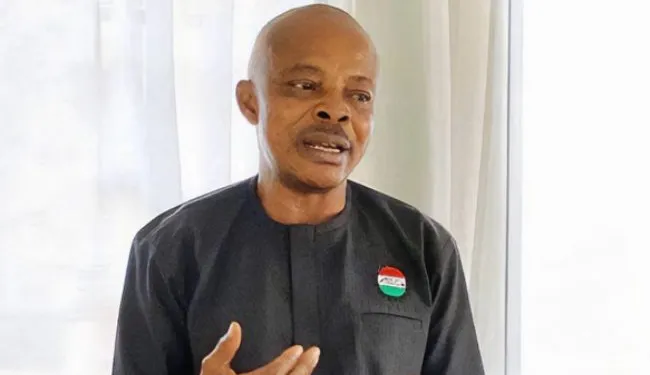
The President of the Nigeria Labour Congress (NLC), Comrade Joe Ajaero, has strongly criticized the electricity banding system used in Nigeria’s power sector. He described it as another way to exploit Nigerians.
Speaking in Yola, Adamawa State, during the NLC National Executive Committee (NEC) meeting, Ajaero condemned the Federal Ministry of Power’s plan to increase electricity tariffs.
According to him, the banding system, which categorizes electricity users into groups like A, B, C, and D, is unfair and deceptive. He argued that whether a consumer falls under Band A or Band D, the electricity supply remains poor.
“This banding system is just a fraud. It’s another way to cheat Nigerians. Whether you’re in Band A or Band D, the power supply is still unreliable. They are only using it to take more money from Nigerians,” Ajaero said.
The NLC president pointed out that even though electricity tariffs have increased, the quality of service has not improved. Many communities still experience long periods without power, and some customers do not even have electricity meters.
Ajaero also questioned the Federal Government’s authority to raise electricity tariffs since the power sector has already been privatized.
He stressed that any decision to increase prices must come from the Nigeria Electricity Regulatory Commission (NERC) after consulting relevant stakeholders, including labour unions and consumer rights organizations.
“The government no longer has the power to raise electricity tariffs. It must go through NERC, which must consult widely before making any changes,” he explained.
Ajaero assured Nigerians that the NLC would oppose any attempt to increase electricity tariffs. He emphasized that Nigerians are already struggling with economic hardship and cannot afford higher power bills.
In addition to electricity concerns, Ajaero also announced that the planned 100% increase in telecommunications tariffs has been canceled.
He revealed that after a lengthy discussion with telecom service providers, they agreed to maintain the current charges for mobile phone calls.
Addressing workers’ wages, Ajaero stated that no public sector worker currently earns less than ₦70,000 per month. However, he acknowledged that many Nigerians still struggle financially.
To help ease this burden, he encouraged the Federal Government to continue its cash transfer program for low-income families.
“Not everyone is on the government payroll, so we urge the government to support the less privileged through cash transfers. We are closely monitoring the process,” he added.
Despite facing opposition and criticism, Ajaero assured Nigerians that the labour movement would not stop fighting for their rights.
“It is difficult, but we will keep pushing. Some accuse us of being too aggressive, while others think we are compromising. But we will not stop fighting for Nigerians,” he concluded.
With the increasing cost of living, the NLC’s stance on electricity and other tariffs will be closely watched as Nigerians await the next steps from the government and regulatory bodies.