
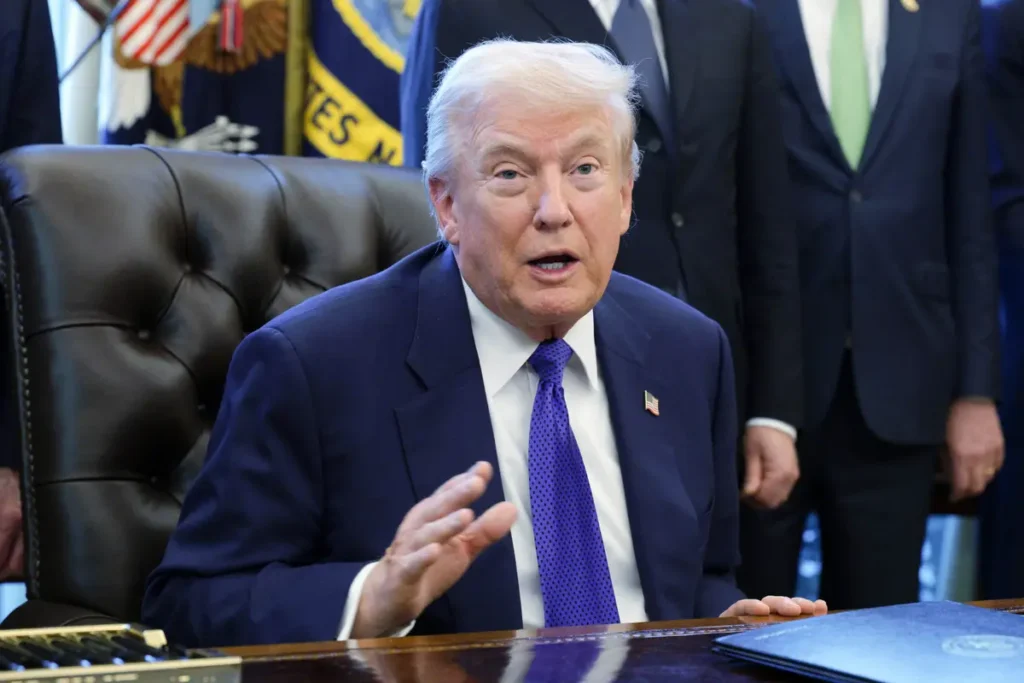
WASHINGTON—President Donald Trump on Feb. 17 announced the launch of three major infrastructure and energy projects totaling $36 billion, marking the first phase of a broader U.S.–Japan trade agreement that includes a $550 billion Japanese investment commitment to American manufacturing and energy development.
In a post on Truth Social, Trump said the projects represent the initial tranche of investments under what he described as a “historic” trade deal aimed at revitalizing the U.S. industrial base, creating hundreds of thousands of jobs, and strengthening national and economic security.
Commerce Secretary Howard Lutnick outlined the projects, emphasizing their role in expanding domestic energy capacity and industrial output.
The first initiative is a natural gas power facility in Ohio with the capacity to generate 9.2 gigawatts of electricity.
According to Lutnick, the plant is expected to bolster grid reliability, expand baseload power generation, and provide affordable energy to support American manufacturing.
A second project will establish a deepwater crude oil export facility off the coast of Texas in the Gulf of America.
The facility is projected to handle between $20 billion and $30 billion in crude oil exports annually, enhancing U.S. refinery export capacity and reinforcing the nation’s position as a leading global energy supplier.
The third project involves construction of a synthetic diamond manufacturing facility in Georgia. The plant will produce industrial-grade grit and is expected to supply sufficient material to meet total U.S. demand for the critical manufacturing input.
Administration officials said the investment structure is designed to deliver returns for Japan while expanding U.S. strategic assets, industrial capacity, and energy production.
Trump credited tariffs implemented under his “America First” trade policy with helping to secure the agreement, saying the scale of the projects would not have been possible without them. He added that the investments would reduce reliance on foreign sources and accelerate domestic production.
The administration characterized the agreement as a milestone in U.S.–Japan economic relations and a significant step toward strengthening American manufacturing and energy independence.