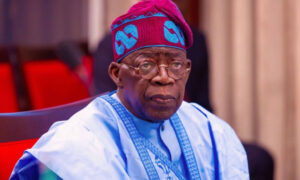
President Bola Tinubu has ruled out a return to petrol subsidy, insisting that Nigeria cannot afford to return to the policy he abolished on his first day in office in May 2023.
Tinubu made the declaration on Monday at an event organised by the City Boy Movement, a pro-Tinubu group led by his son, Seyi Tinubu, which is mobilising young Nigerians ahead of the 2027 presidential election.
Drawing parallels with the biblical account of Moses leading the Israelites out of Egypt, the president urged Nigerians to remain committed to the economic reforms introduced by his administration, despite the challenges associated with their implementation.
He argued that just as Moses could not be expected to return to Egypt after leading the Israelites to freedom, Nigeria should not reverse its decision to end petrol subsidy payments.
“I came and I removed subsidy the first day. I knew Nigeria would go bankrupt. There was nothing left to pay subsidy. I could listen to my political opponents promising a return to subsidy,” Tinubu said.
Recalling his religious studies, the president added: “I remember my scripture studies, both in the Bible and in the Holy Quran.
“When Moses and Musa left Egypt, they faced a challenge, and the Red Sea parted and gave way. You cannot ask Moses to go back to Egypt.”
Tinubu also urged young Nigerians to obtain their Permanent Voter Cards (PVCs) and participate actively in the 2027 general election, stressing the importance of grassroots mobilisation in securing electoral support.
“Make sure every young person you know has a PVC and uses it,” he said.
“Tell them what we have done and tell them what we will do.
“We will campaign with our ideas, original thoughts and deep thinking to move this country forward. With your energy and support, never will we go back to Egypt.”
The president announced the removal of the petrol subsidy during his inauguration on May 29, 2023, a decision that has remained one of the most consequential economic policies of his administration.
The policy has attracted criticism from opposition figures, many of whom have pledged to reduce petrol prices or reconsider subsidy payments if elected in 2027.
Last week, Rabiu Musa Kwankwaso, the vice-presidential candidate of the Nigeria Democratic Congress (NDC), said the party would do whatever was necessary to reduce petrol prices, including potentially restoring the subsidy if it wins the next presidential election.
His remarks followed an earlier declaration by Peter Obi, the NDC presidential candidate, that his administration would restore the petrol subsidy after addressing corruption.
Similarly, Donald Duke, the presidential candidate of the Peoples Redemption Party (PRP), said earlier this month that he would seek to reduce petrol prices to about ₦300 per litre if elected president in 2027.
Former Vice-President Atiku Abubakar, the presidential candidate of the African Democratic Congress (ADC), also declared in August that he would restore the petrol subsidy if elected.
The competing positions on petrol subsidy have emerged as a major issue in the early political debate ahead of the 2027 presidential election, with the Tinubu administration defending the removal of the subsidy while opposition candidates promise measures aimed at easing the burden of rising living costs on Nigerians.