Nigeria cannot afford another opaque and potentially costly subsidy regime presented under a new policy label.
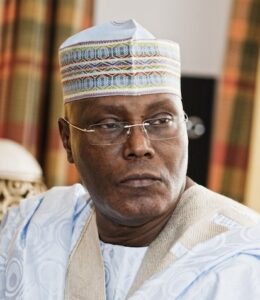
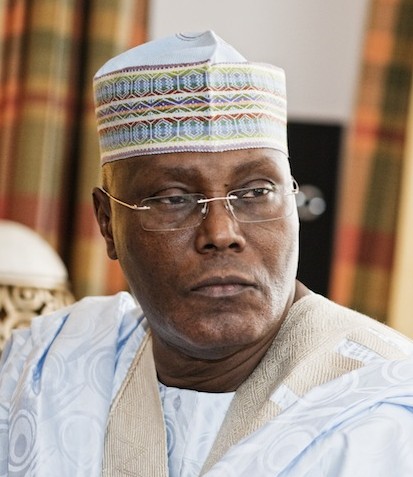
Former Vice-President Atiku Abubakar should be clear with Nigerians on whether he has a coherent, properly costed and workable petroleum policy, or whether his proposal amounts to political posturing over a policy that has helped restore the fiscal health of the three tiers of government and improve macroeconomic stability.
The economy is too fragile to accommodate policy somersaults, incoherence, destructive populism or election-driven gimmicks.
Atiku has proposed a subsidy model that would “follow the barrel of crude.” But does the former Vice-President understand that petrol accounts for only about 45 per cent of the products obtained from a refined barrel of crude oil?
A barrel of crude also produces diesel, aviation fuel, kerosene, petrochemical feedstocks, asphalt, hydrocarbon gas liquids, lubricants, waxes, petroleum coke and sulphur.
Diesel accounts for roughly 25 per cent of a barrel and was deregulated by the Obasanjo-Atiku administration in 2004. Jet fuel and kerosene account for about nine per cent and were deregulated in 2009, with kerosene subsidies eventually removed in 2016.
Another 10 to 15 per cent provides feedstocks used in producing synthetic rubber, nylon, polyester and plastics found in everyday products, while asphalt accounts for about two to four per cent. Hydrocarbon gas liquids such as propane and butane make up roughly four per cent, while lubricants and waxes account for about one to two per cent.
This raises a fundamental question: If the subsidy is to follow the barrel, will the proposed policy extend to all the other products derived from crude oil?
Will kerosene used by low-income households and diesel relied upon by homes, businesses, factories and transport operators also receive subsidies? And would refineries supplied with discounted crude be allowed to profit from the remaining 55 per cent of the barrel while government support is concentrated on petrol?
These questions expose what appears to be a significant gap in the former Vice-President’s understanding of the practical implications and economic consequences of his newly proposed subsidy policy.
Nigeria needs sustainable petroleum-sector reforms, not a return to an opaque subsidy regime that could once again place enormous pressure on public finances.