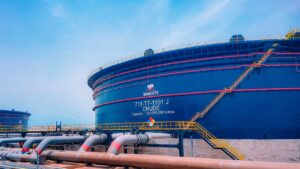
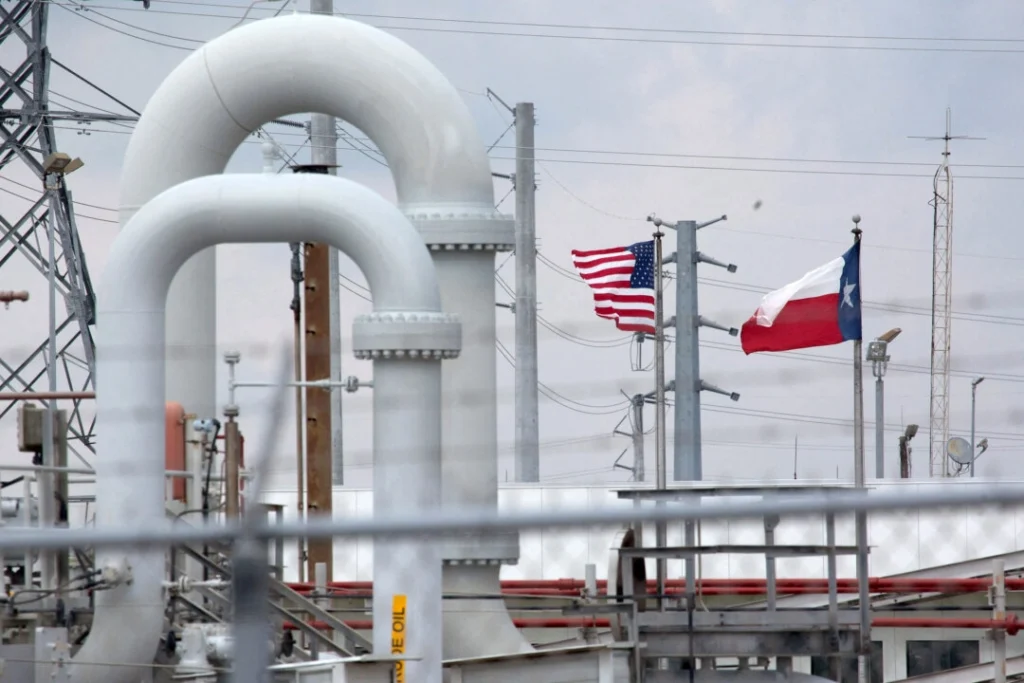
The Trump administration will release 172 million barrels of oil from the U.S. Strategic Petroleum Reserve (SPR) beginning next week in an effort to ease rising gasoline prices amid the ongoing conflict with Iran.
The Department of Energy said the release will occur over approximately 120 days based on planned discharge rates.
“Unlike the previous administration, which left America’s oil reserves drained and damaged, the United States has arranged to more than replace these strategic reserves with approximately 200 million barrels within the next year—20 percent more barrels than will be drawn down—and at no cost to the taxpayer,” the department said in a statement, adding that the move reflects continued strength in the nation’s energy security.
President Donald Trump announced the decision earlier Wednesday, saying the United States would replenish the reserves after the release.
“We’ll do that, and then we’ll fill it up. I filled it up once, and I’ll fill it up again,” Trump said when asked about tapping the reserve.
The decision comes as fuel prices continue to rise nationwide.
According to AAA, the national average price for gasoline reached $3.58 per gallon Wednesday, up from $3.20 a week earlier and $2.94 a month ago. Diesel prices averaged $4.83 per gallon Wednesday, compared with $4.04 last week and $3.67 a month ago. California reported the highest prices, averaging $5.34 per gallon for regular gasoline.
Trump said the release is intended to reduce the financial burden on Americans facing higher fuel costs linked to the war with Iran.
“We have to get rid of the evil,” the president said, referring to the Iranian regime, adding that releasing oil from U.S. reserves will help ease pressure at the pump.
The U.S. move follows a separate announcement Wednesday from the Paris-based International Energy Agency (IEA), which said member nations agreed to collectively release 400 million barrels of oil from strategic reserves.
The coordinated action would mark the largest withdrawal on record as governments attempt to stabilize global energy markets.
Global oil demand averages about 100 million barrels per day, meaning the IEA’s planned release would cover roughly four days of worldwide consumption.
Oil markets reacted to the announcement, with U.S. benchmark West Texas Intermediate rising nearly 5 percent Wednesday to surpass $92 per barrel on the New York Mercantile Exchange. Brent crude, the global benchmark, also climbed nearly 5 percent to about $97 per barrel in overseas trading.
Despite the gains, oil prices have fallen significantly from earlier in the week when crude briefly topped $115 per barrel.
The IEA’s decision followed a meeting of 32 member governments to discuss the impact of the Iranian conflict, particularly disruptions to shipping through the Strait of Hormuz.
“The oil market challenges we are facing are unprecedented in scale,” IEA Executive Director Fatih Birol said in a statement. “Oil markets are global so the response to major disruptions needs to be global too. I am pleased that IEA members are showing strong solidarity in taking decisive action together.”
The coordinated release marks the sixth time since the agency’s founding in 1974 that members have jointly tapped emergency reserves.
However, analysts caution that it may take time for the additional oil supply to reach markets.
Mark Malek, chief investment officer at Siebert Financial, said the move could also have a psychological impact on traders.
“The market responded to it like a patient responding to a placebo that they believe is real medicine,” Malek said.
Meanwhile, Iran warned Wednesday that oil prices could surge to $200 per barrel as tensions escalate.
The United Kingdom Maritime Trade Operations reported that unidentified projectiles struck three commercial vessels near the Strait of Hormuz overnight, targeting a bulk carrier, cargo vessel, and container ship.