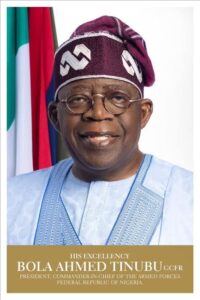
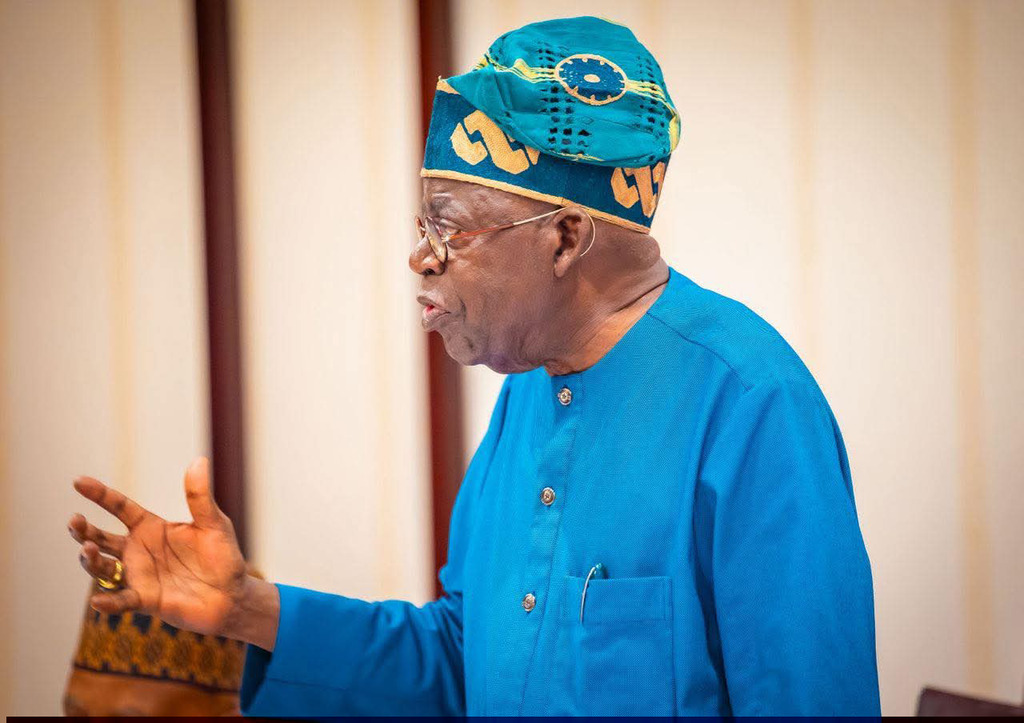
President Bola Tinubu has identified the absence of robust long-term national planning across successive administrations as a key factor behind Nigeria’s persistent development and growth challenges.
The President made the remarks on Tuesday at the Presidential Villa, Abuja, while receiving a delegation of Enugu State stakeholders led by Governor Peter Mbah.
Tinubu observed that Nigeria’s developmental setbacks have been exacerbated by attempts in the past to fund long-term infrastructure and development projects using short-term financing models, a mismatch he said has undermined sustainability and continuity.
He stressed the need for a deliberate shift toward strategic, long-range national planning, noting that a lack of sustained policy direction has constrained progress over time.
Despite these challenges, the President expressed optimism that coordinated leadership at both federal and subnational levels would place Nigeria firmly on a stronger growth trajectory and enhance its position as a leading economy in Africa.
Commending Governor Mbah’s administration in Enugu State, Tinubu described ongoing reforms as “transformative,” citing improvements in security, infrastructure, healthcare, and education as clear indicators of progress and effective governance.
He said the outcomes being recorded in Enugu demonstrate that difficult but necessary reforms are beginning to yield measurable results.
Tinubu further reaffirmed the Federal Government’s commitment to sustained collaboration with state governments in delivering critical national infrastructure, including the Port Harcourt–Enugu rail line, ongoing power sector reforms, and other priority projects.
According to him, development efforts must be pursued as a shared responsibility across all tiers of government.
“It is not a one-man orchestra. It is a collective effort at the national, subnational and local government levels,” the President stated.
He also urged state authorities to ensure that development initiatives are extended to local government areas in order to deepen grassroots impact.
Earlier, Governor Mbah expressed appreciation for the Federal Government’s interventions in Enugu State and reiterated support for the Tinubu administration.
He highlighted key projects including the concessioning of the Akanu Ibiam International Airport, the establishment of the South East Development Commission, as well as ongoing federal road and rail infrastructure projects.
Mbah noted that rehabilitation works on sections of the Enugu–Port Harcourt Expressway and progress on the Enugu–Onitsha corridor have significantly improved regional connectivity, while the planned completion of the Port Harcourt–Enugu rail line is expected to further stimulate economic activity in the South East.
He also reported a decline in security incidents in the state and pointed to improvements in education, healthcare delivery, and infrastructure development as drivers of enhanced livelihoods.
The Governor reaffirmed the solidarity and support of the Enugu State leadership and people for the Tinubu administration ahead of the 2027 general elections.
The delegation included former Senate President Ken Nnamani, former Governor Ifeanyi Ugwuanyi, former Governor Sullivan Chime, former Governor Jim Nwobodo, and Rev Fr Ejike Mbaka, among other stakeholders.