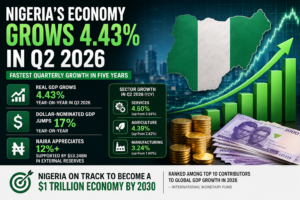
Economists have explained why Nigeria’s 3.98% GDP growth in the last quarter has not translated into cheaper living costs for citizens. According to them, the growth recorded is mostly “non-inclusive,” meaning it does not directly improve the daily lives of ordinary Nigerians. They noted that while the economy appears to be expanding on paper, the key sectors that affect people’s pockets are still weak.
The experts pointed out that inflation remains extremely high, wiping out any benefits of GDP growth. Prices of food, transport, fuel, and essential goods continue to rise, making it hard for families to afford basic needs. They stressed that until inflation is controlled, Nigerians will not feel the effects of any economic improvement, no matter how impressive the numbers look.
They also explained that the growth recorded is driven by sectors like telecoms, finance, and services, which do not automatically create wide employment or direct financial relief for low-income earners. Meanwhile, agriculture, manufacturing, and power — the sectors that influence daily living costs — are still struggling with poor output, high operating costs, and insecurity challenges.
Economists therefore urged the government to focus on stabilizing prices, improving productivity, and supporting businesses that create jobs. They added that unless economic policies start targeting real household welfare, Nigerians will keep hearing about growth statistics without experiencing any positive change in their daily lives.