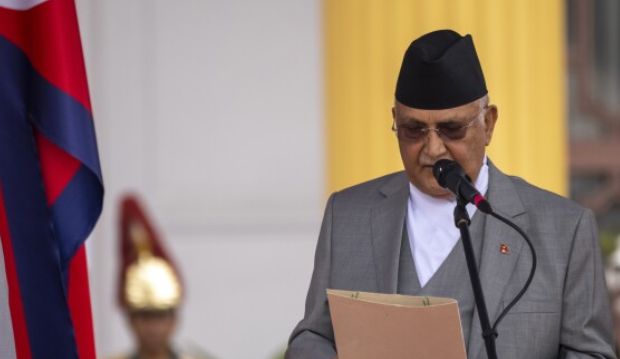
Nepal’s Prime Minister, Khadga Prasad Oli, has resigned immediately after violent protests broke out against a social media ban and government corruption.
His resignation followed attacks where protesters set fire to the homes of some of Nepal’s top political leaders. The unrest came after the social media ban was lifted early Tuesday, one day after demonstrations turned deadly when police fired on protesters, killing 19 people.
Local reports and videos shared online showed demonstrators attacking the residences of key politicians in and around Kathmandu. The homes set ablaze included those of Sher Bahadur Deuba, leader of the Nepali Congress, President Ram Chandra Poudel,
Home Minister Ramesh Lekhak, and Communist Party of Nepal Maoist leader Pushpa Kamal Dahal. A private school owned by Deuba’s wife, Foreign Minister Arzu Deuba Rana, was also burned.
The protests began as opposition to the social media ban but quickly grew into a wider movement against corruption and political mismanagement, reflecting citizens’ growing frustration with their leaders.
Nepal, a Himalayan country of about 30 million people, has a long history of political turbulence. Since abolishing its 239-year-old monarchy in 2008 and becoming a republic, the nation has experienced over a dozen governments, often marked by instability.