
On October 8, 2024, the Supreme Court of Nigeria commenced hearings in a significant case that could reshape the legal landscape of the country. The case, titled Kogi AG and 16 Others v. AGF, challenges the constitutionality of several federal acts, including the Economic and Financial Crimes Commission (EFCC) Act. The court has adjourned the case to October 22, 2024, for further hearings.
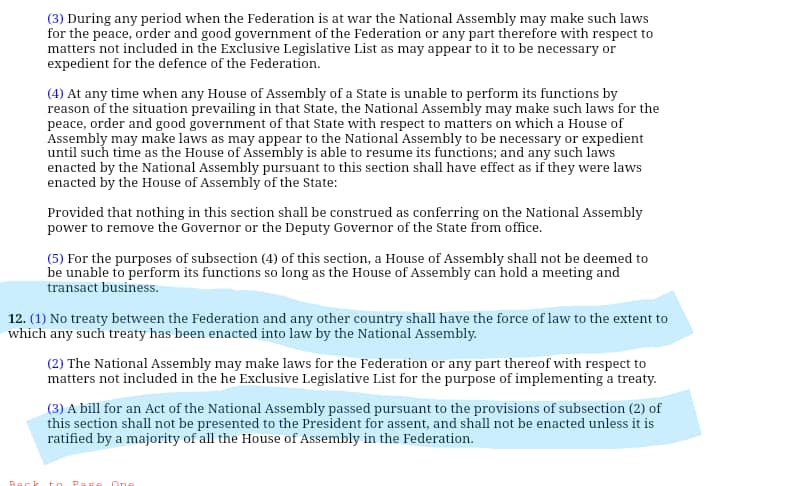
The AGs of Kogi State and 16 other states have brought this lawsuit against the Attorney General of the Federation (AGF), arguing that certain federal laws were enacted without the necessary involvement of the states. According to the plaintiffs, these acts are unconstitutional because they were based on an international agreement—the UN Convention—without consulting the states as required by the Nigerian Constitution.
The primary legal issues at stake in this case revolve around the interpretation of the Constitution and the principles of federalism in Nigeria:
The plaintiffs argue that, under Section 12 of the 1999 Constitution, states must be consulted when federal laws are created based on international agreements. The failure to include the states in the legislative process makes these laws invalid.
Another point of contention is whether the subjects of these acts fall under the exclusive legislative list of the National Assembly. The AGs contend that these matters are not solely federal issues, thereby necessitating state consultation in the law-making process.
The AGF has countered the states’ arguments by claiming that the federal government did not need the states’ consent to enact these laws. This position has been met with skepticism from legal experts and observers, who believe it undermines the principles of federalism.
Legal scholars often reference the landmark case of Macfoy v. UAC, which asserts that if an action does not comply with a legal requirement, it is considered null and void. This principle supports the AGs’ stance that any laws passed without proper procedure cannot stand.
Moreover, the Supreme Court’s ruling in Nwobike’s Case, which acknowledged that laws must be rooted in the constitutional framework, adds weight to the argument that the challenged acts may lack legitimacy due to improper enactment.
There is a growing sense of confidence among Nigerians regarding the Supreme Court’s ability to deliver justice in this case. Many believe that the current Chief Justice, Hon. Justice Kudirat Kekere-Ekun, is committed to upholding the integrity and independence of the judiciary. Her leadership is viewed as a positive sign that the court will make a fair ruling based on constitutional principles.
The outcome of this case holds significant implications for Nigeria’s federal structure. If the Supreme Court rules in favor of the AGs, it could reinforce the importance of state involvement in federal legislation, strengthening the doctrine of true federalism. Conversely, a ruling in favor of the AGF could further centralize power within the federal government, raising concerns about the erosion of state authority.
As the Supreme Court prepares to deliberate on this critical case, the eyes of the nation are fixed on its decision. A ruling that affirms the need for state consultation in the enactment of federal laws could mark a turning point for Nigerian federalism and governance. With the principles of the rule of law and constitutional order at stake, the upcoming hearing is more than just a legal battle; it is a pivotal moment in Nigeria’s quest for a balanced and fair system of governance.
As the court date approaches, citizens and legal experts alike are hopeful for a verdict that aligns with the Constitution and promotes justice for all states in Nigeria. The outcome will undoubtedly shape the future of federal-state relations in the country for years to come.