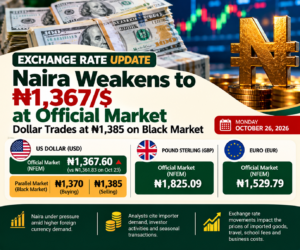
ABUJA, October 27, 2026 — The Nigerian naira came under renewed pressure against the United States dollar, with the local currency closing at ₦1,367.60 per dollar in the official foreign exchange market on Monday.
Data published for the Nigerian Foreign Exchange Market (NFEM) showed that the naira weakened from ₦1,361.83 per dollar recorded on Friday, October 23, reflecting continued pressure on the domestic currency.
In the parallel market, commonly known as the black market, the dollar traded at about ₦1,370 for buying and ₦1,385 for selling, although rates vary by location and Bureau de Change operator.
The latest figures indicate a gap between the official and parallel markets, highlighting the differing rates available to individuals and businesses seeking foreign currency.
The pound sterling traded at approximately ₦1,825.09 in the official market, while the euro exchanged at about ₦1,529.79, according to available exchange-rate data for October 26.
Factors Driving Exchange-Rate Movements
Market analysts have identified foreign-currency demand from importers, investor profit-taking and seasonal business transactions as factors putting pressure on the naira. Reuters reported last week that increased demand for dollars ahead of the holiday season could weigh on the currency.
The availability of foreign exchange, capital inflows, export earnings and the Central Bank of Nigeria’s market interventions remain important factors influencing the naira’s performance.
A sustained improvement in dollar supply could help ease pressure on the local currency, while strong demand without a corresponding increase in supply could trigger further volatility.
Implications for Nigerians
Exchange-rate movements have direct implications for the prices of imported goods, fuel-related products, raw materials, machinery and other items that depend on foreign currency.
A weaker naira can increase import costs and put additional pressure on businesses and consumers, while a more stable exchange rate could improve price planning and business confidence.
For Nigerians purchasing dollars for school fees, medical bills, travel and international transactions, the actual rate will depend on the authorised channel, transaction requirements and prevailing market conditions.
The exchange rates cited are indicative figures based on the latest available market data and may change as trading progresses. The Central Bank of Nigeria and official market operators remain key sources for verified closing rates.