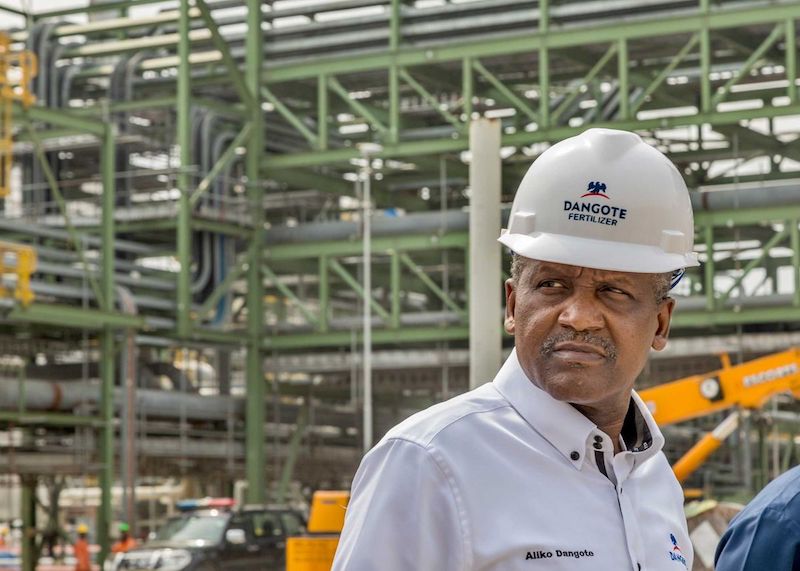
Nairobi, Kenya — Africa’s foremost industrialist and President/CEO of Dangote Group, Aliko Dangote, has announced plans to collaborate with Kenya and Uganda on the development of a major oil refinery in Tanzania, modelled on the company’s flagship 650,000 barrels-per-day facility in Nigeria.
Speaking on Thursday at a regional infrastructure financing conference in Nairobi, Mr Dangote said the proposed project could advance rapidly with strong political support from regional governments.
“If they will support the refinery, we’ll build the identical one that we have in Nigeria,” he said, referencing ongoing discussions with the Presidents of Kenya and Uganda.
“It will work. There’s nothing that can stop it.”
The conference was attended by regional leaders, including Kenyan President William Ruto and Ugandan President Yoweri Museveni, alongside other senior stakeholders in infrastructure and energy development.
Mr Dangote indicated that the initiative forms part of a broader ambition to transform Africa’s energy and industrial base through large-scale, locally anchored infrastructure.
He revealed that related construction activities are already underway, including early-stage piling works for refining capacity that could scale up to 1.4 million barrels per day—potentially positioning it among the largest refinery complexes globally.
According to him, the expanded capacity could account for approximately 10 percent of total refining capacity in the United States, and would be integrated with petrochemical production to support downstream industrial growth across the continent.
Highlighting the importance of local value addition, Mr Dangote pointed to petrochemical outputs such as polypropylene as critical inputs for industries including packaging, construction, and food supply chains. He warned that reliance on imports exposes African economies to global price volatility.
He further emphasised the continent’s growing capacity to deliver complex industrial projects, citing Africa’s expanding financial systems and technical expertise.
Recalling earlier financing challenges in his own industrial ventures, he referenced a $478 million international loan secured in the early 2000s, which was repaid ahead of schedule despite initial scepticism from lenders.
“It is possible. Africans can do it. Let us not be scared,” he said.
Mr Dangote also commended policy efforts aimed at encouraging value addition within Africa, including restrictions on raw material exports, arguing that such measures strengthen industrialisation and job creation.
The proposed Tanzania refinery is expected to complement broader regional energy integration efforts. East Africa currently imports the majority of its refined petroleum products, primarily from the Middle East, leaving economies vulnerable to global supply disruptions and price fluctuations.
President William Ruto noted that East African countries are exploring a joint refinery project in Tanga, Tanzania, designed to serve multiple regional oil sources, including Kenya, Uganda, South Sudan, and the Democratic Republic of the Congo.
If realised, the Dangote-led initiative would mark a significant milestone in Africa’s push toward energy self-sufficiency and industrial expansion.