
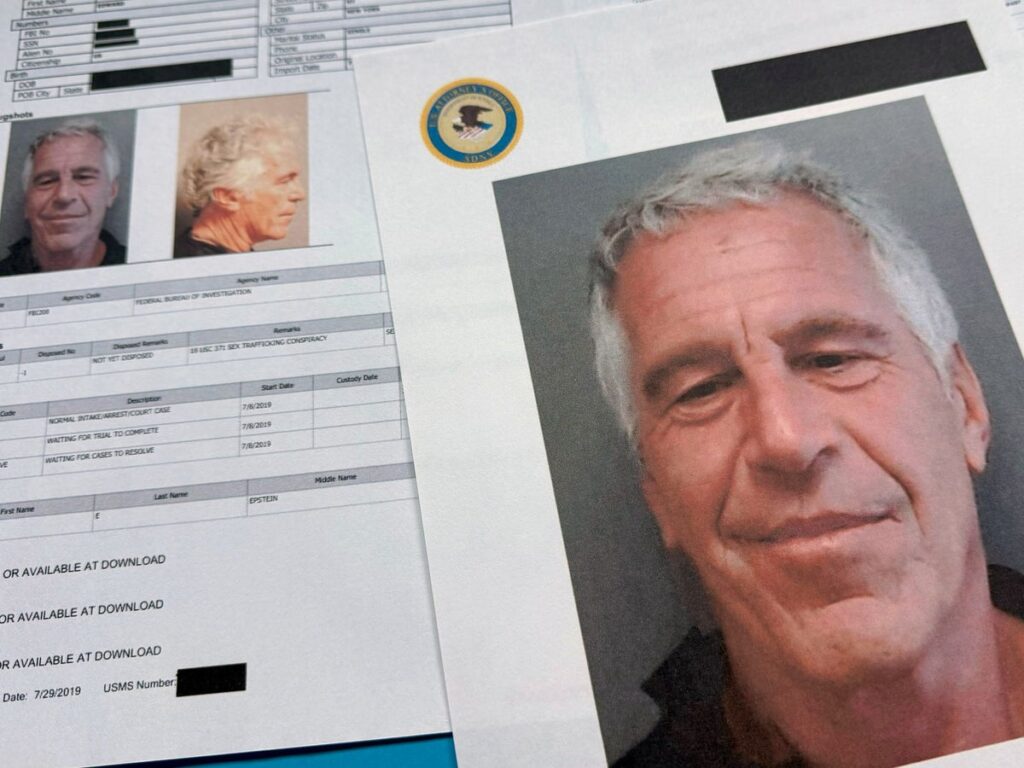
WASHINGTON, D.C. — Attorney General Pam Bondi announced Saturday that all files related to the federal investigation and prosecution of Jeffrey Epstein have been released to the public, marking what she described as a sweeping step toward transparency.
According to Bondi, the Department of Justice has made millions of emails, photographs, and investigative documents publicly accessible. The materials were disclosed as part of a required update to Congress dated February 14.
As part of the release, the Department published a list of 305 high-profile individuals referenced in the case files. Officials emphasized that inclusion in the documents does not imply guilt or involvement in Epstein’s criminal conduct, which centered on sex trafficking and abuse of minors.
Many individuals named in the records had previously been publicly linked to Epstein, including convicted associate Ghislaine Maxwell and Britain’s Prince Andrew, formally known as Prince Andrew. However, officials noted this marks the first time a comprehensive list has been formally released by Bondi and the current administration.
The list spans entertainers, business leaders, and political figures — both living and deceased — who appear in the documents at least once. Among those named are musicians Beyoncé, Cher, Bruce Springsteen, and Jay-Z.
Political figures identified in the files include President Donald Trump, Vice President JD Vance, former First Lady Michelle Obama, Senator Marco Rubio, and former President Bill Clinton and former Secretary of State Hillary Clinton.
Additional prominent figures listed include actor Robert De Niro, singer Diana Ross, philanthropist Melinda Gates, commentator Tucker Carlson, and Meghan Markle.
In a joint statement, Bondi and Deputy Attorney General Todd Blanche said the names appear in a “wide variety of contexts” throughout the documents.
The Department underscored that “no records were withheld or redacted on the basis of embarrassment, reputational harm, or political sensitivity, including to any government official, public figure, or foreign dignitary.”
Bondi’s letter explains that the materials were organized into nine distinct categories. The only records withheld, she wrote, fall under legally permitted exemptions, including deliberative-process privilege, attorney work-product privilege, and attorney-client privilege, where privileged material could not be segregated from responsive records.
The full list of individuals referenced in the Epstein case files is available as part of the Department of Justice’s official release.