

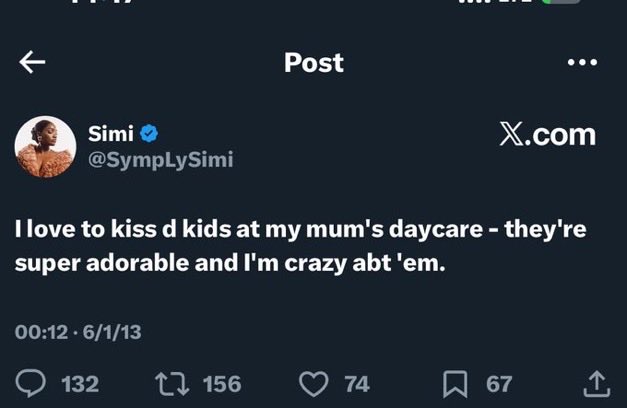
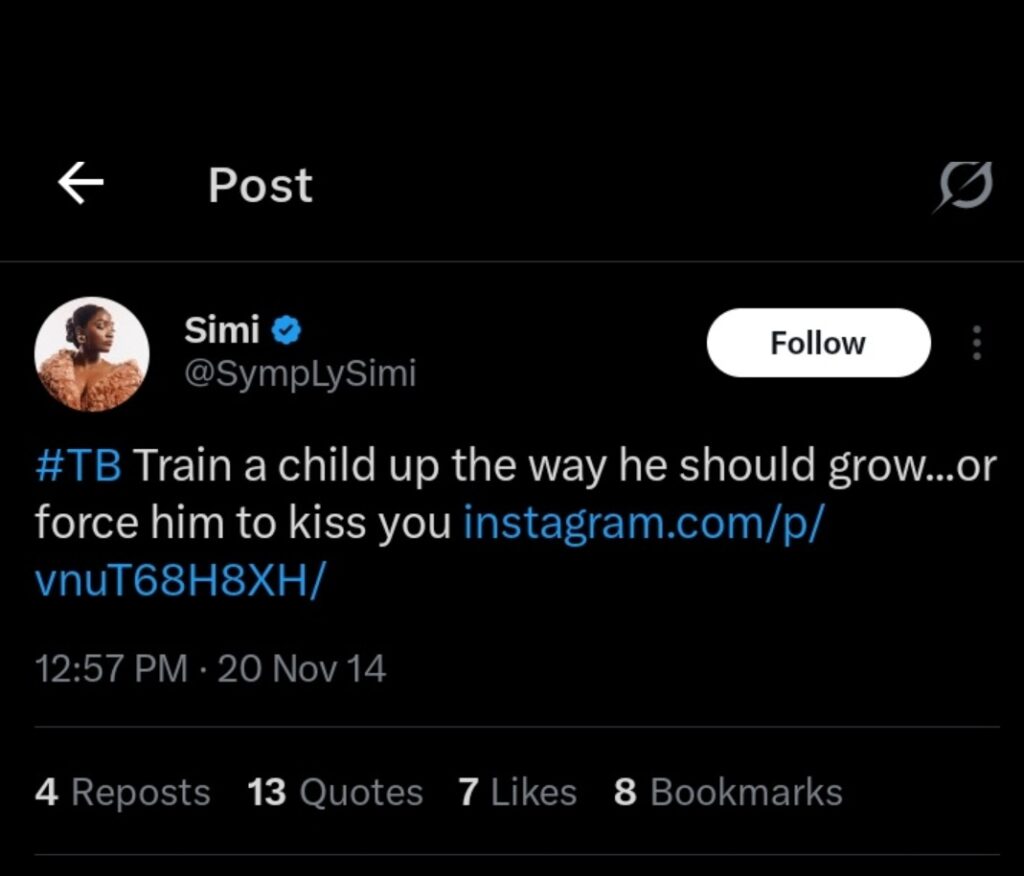

Nigerian singer Simisola Bolatito Kosoko, popularly known as Simi, has come under renewed scrutiny on social media following the resurfacing of a decade-old tweet that many users have described as inappropriate.
The tweet, posted on March 14, 2012, from her X (formerly Twitter) account, referenced a four-year-old boy named David and contained remarks that critics say sexualised a minor.
The post, which has since gone viral, described the child as having a “crush” on the singer and included comments about his physical closeness to her, concluding with a question about whether she should “give him a chance.”
The resurfaced post triggered widespread backlash, with numerous users condemning the language used and calling for accountability. Several commenters questioned the appropriateness of referencing romantic or sexual behaviour in relation to a child, while others accused the singer of conduct that would have drawn stronger condemnation if made by a male public figure.
The renewed controversy comes amid heightened online tensions following a false rape allegation made by TikToker Mirabel, whose claims sparked intense debate across Nigerian social media in February. Mirabel had alleged she was raped and injured in her home, a story that initially generated widespread outrage and sympathy before skepticism emerged.
The narrative shifted after social media activist VeryDarkMan stated that he spoke directly with Mirabel, who allegedly admitted the rape claim was fabricated and confessed to operating a fake account used during the controversy.
During the peak of the debate, Simi had publicly spoken out against rape culture, urging accountability and criticising backlash against those who call out sexual violence. Her comments drew mixed reactions, with some users accusing her of minimising the impact of false accusations.
Following the revelation that Mirabel’s claim was false, social media users began revisiting past statements made by public figures involved in the discourse, including Simi’s 2012 tweet, which has now become the focal point of renewed criticism and debate online.