Iran announced that initial agreements were reached during mediated talks with the United States held in Geneva, Switzerland, on Feb. 17, marking what officials described as constructive progress in ongoing diplomatic efforts.
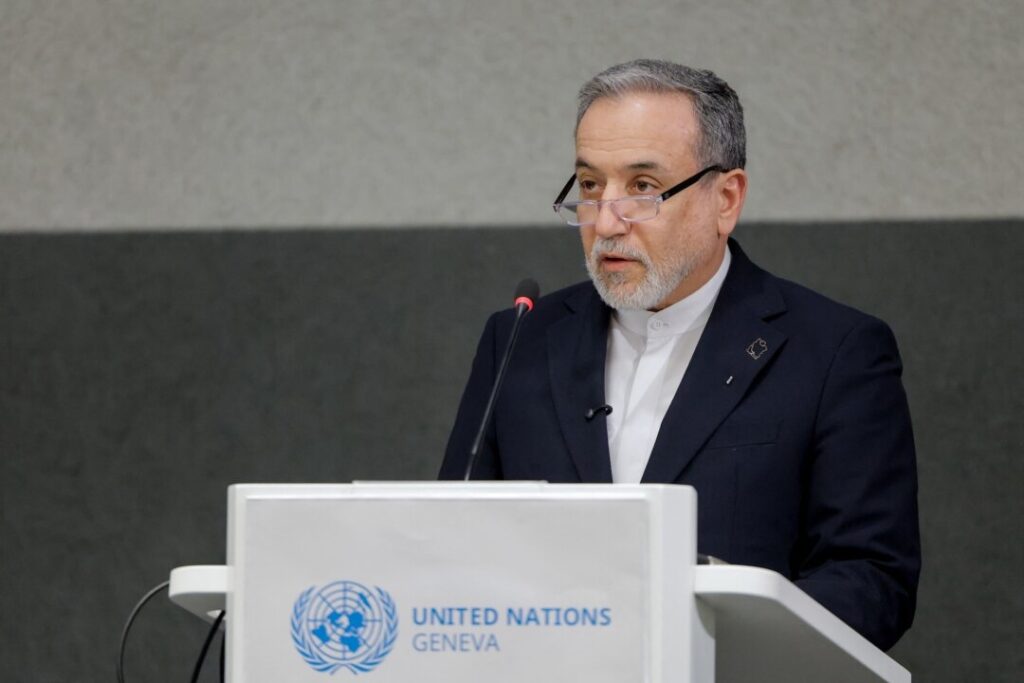
Speaking after the negotiations, Iranian Foreign Minister Abbas Araghchi said the two sides “were able to reach a general understanding on a set of guiding principles,” according to a Feb. 17 post on Telegram. He indicated that discussions would now advance based on those principles.
“This does not mean that we can reach an agreement quickly, but at least the process has begun,” Araghchi said. “We hope this can be completed as soon as possible and are prepared to devote sufficient time to it.”
He cautioned that drafting a final agreement would involve more detailed and complex negotiations but described the latest round as showing “good” progress compared with previous talks.
While no specific timeline has been established, Araghchi noted that both sides now have “a clearer picture” of the necessary next steps.
At the same time, he reaffirmed Iran’s defensive posture, stating that the country remains “fully prepared to defend itself against any threat or aggressive action,” warning that the consequences of such actions would not be confined to Iran’s borders.
Engagement With the IAEA
Araghchi also confirmed that Tehran will continue its engagement with the International Atomic Energy Agency (IAEA), noting that the agency’s role in Iran–U.S. relations was discussed during the Geneva meetings.
On Feb. 16, Araghchi met with IAEA Director General Rafael Mariano Grossi in Geneva. Grossi said the two held “in-depth technical discussions” ahead of the negotiations with U.S. officials.
The IAEA declared Iran noncompliant with its obligations under the Nuclear Non-Proliferation Treaty on June 12.
Iran subsequently suspended cooperation with the agency following U.S. strikes on its nuclear facilities on June 22, 2025, carried out under the codename Operation Midnight Hammer.
Diplomatic Efforts and Regional Tensions
The latest talks were conducted at the Omani Embassy in Geneva, following earlier meetings between Iranian officials and representatives of Oman.
The Gulf state previously hosted an initial round of indirect talks between Washington and Tehran earlier this month, which concluded without a formal agreement.
As diplomacy unfolded in Switzerland, Iran simultaneously conducted military exercises in the Strait of Hormuz, a critical global oil transit route. Iran’s semi-official Fars News Agency reported temporary closures of parts of the waterway for “security precautions” as the Islamic Revolutionary Guard Corps carried out drills.
The Strait of Hormuz handles roughly one-fifth of global oil flows, and Iran has previously warned it could restrict commercial shipping in response to military action.
The exercises followed additional drills on Feb. 16, which state-affiliated media said were aimed at testing intelligence and operational capabilities across the Strait of Hormuz, the Persian Gulf, and the Gulf of Oman.
The maneuvers came amid heightened regional tensions, including the deployment of an additional U.S. aircraft carrier to the area ordered by U.S. President Donald Trump.
Statements From Iranian Leadership
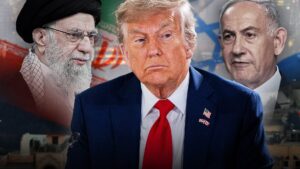
During the Geneva talks, Iran’s Supreme Leader, Ali Khamenei, issued a series of posts on X addressing the United States.
“The US President keeps saying that they have the strongest military force in the world,” Khamenei wrote on Feb. 17. “The strongest military force in the world may at times be struck so hard that it cannot get up again.”
In additional posts, Khamenei criticized U.S. military deployments in the region and rejected calls to limit Iran’s missile capabilities, asserting that deterrent weaponry is essential to national defense. He also maintained that Iran’s nuclear program is not intended for military purposes.
President Trump said on Feb. 16 that he would be indirectly involved in the second round of nuclear talks.
“We’ll see what can happen, but typically Iran is a very tough negotiator,” Trump said. “I think they want to make a deal. I don’t think they want the consequences of not making a deal.”
The Geneva discussions mark the latest attempt to de-escalate tensions over Iran’s nuclear program amid continued military posturing and regional uncertainty.