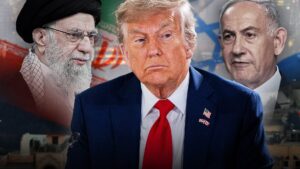
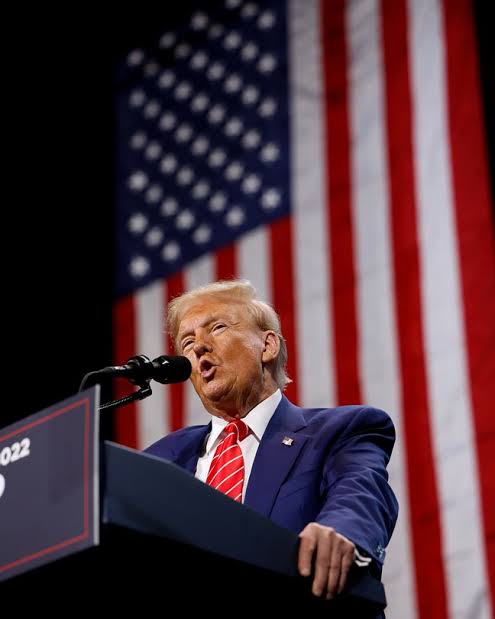
WASHINGTON, Feb. 16 — Donald Trump said Sunday that he will be indirectly involved in the second round of nuclear negotiations between U.S. and Iranian officials scheduled for Feb. 17 in Geneva, describing the talks as “very important” and expressing cautious optimism about a potential agreement.
Speaking to reporters aboard Air Force One, Trump said he believes Tehran ultimately wants a deal to restrain its nuclear weapons program, though he acknowledged Iran’s reputation as a “very tough negotiator.”
“We’ll see what can happen,” Trump said. “I think they want to make a deal. I don’t think they want the consequences of not making a deal.”
The president also suggested that Iran could have avoided U.S. airstrikes on its nuclear infrastructure in June 2025 had it reached an earlier agreement with Washington.
The strikes involved U.S. B-2 stealth bombers targeting Iranian nuclear facilities.
“We could have had a deal instead of sending the B-2s in to knock out their nuclear potential,” Trump said. “We had to send the B-2s. So I hope they’re going to be more reasonable.”
Following the June strikes, Tehran formally suspended cooperation with the International Atomic Energy Agency (IAEA), the United Nations’ nuclear watchdog.
Iranian Foreign Minister Abbas Araghchi announced on X that he arrived in Geneva with a delegation of nuclear experts ahead of the talks.
“I am in Geneva with real ideas to achieve a fair and equitable deal. What is not on the table: submission before threats,” Araghchi wrote.
Araghchi is scheduled to meet with Badr al-Busaidi, Oman’s foreign minister, who is mediating the negotiations. He also met Sunday with IAEA Director General Rafael Mariano Grossi in Geneva. Grossi said the two held “in-depth technical discussions” in preparation for negotiations with the U.S. delegation.
On June 12, the IAEA declared Iran noncompliant with its obligations under the Nuclear Non-Proliferation Treaty.
The previous round of U.S.-Iran talks, held in Oman on Feb. 6, ended without agreement.
Washington has sought to broaden the scope of negotiations beyond nuclear restrictions to include Iran’s missile stockpile and other regional security concerns.
Tehran has maintained that discussions must focus exclusively on nuclear curbs in exchange for sanctions relief and has rejected any demand for zero uranium enrichment. Iranian officials have also said the country’s missile capabilities are not open for negotiation.
Trump has warned that failure to reach an agreement would be “very traumatic” for Iran’s leadership. The United States deployed a second aircraft carrier strike group to the Middle East last week amid heightened tensions.
Iran’s Supreme Leader Ali Khamenei said Iran does not seek conflict but would respond forcefully to any attack on its territory, after Trump previously said he had dispatched “a massive armada” to the region.
Further developments are expected following the Geneva talks on Feb. 17.