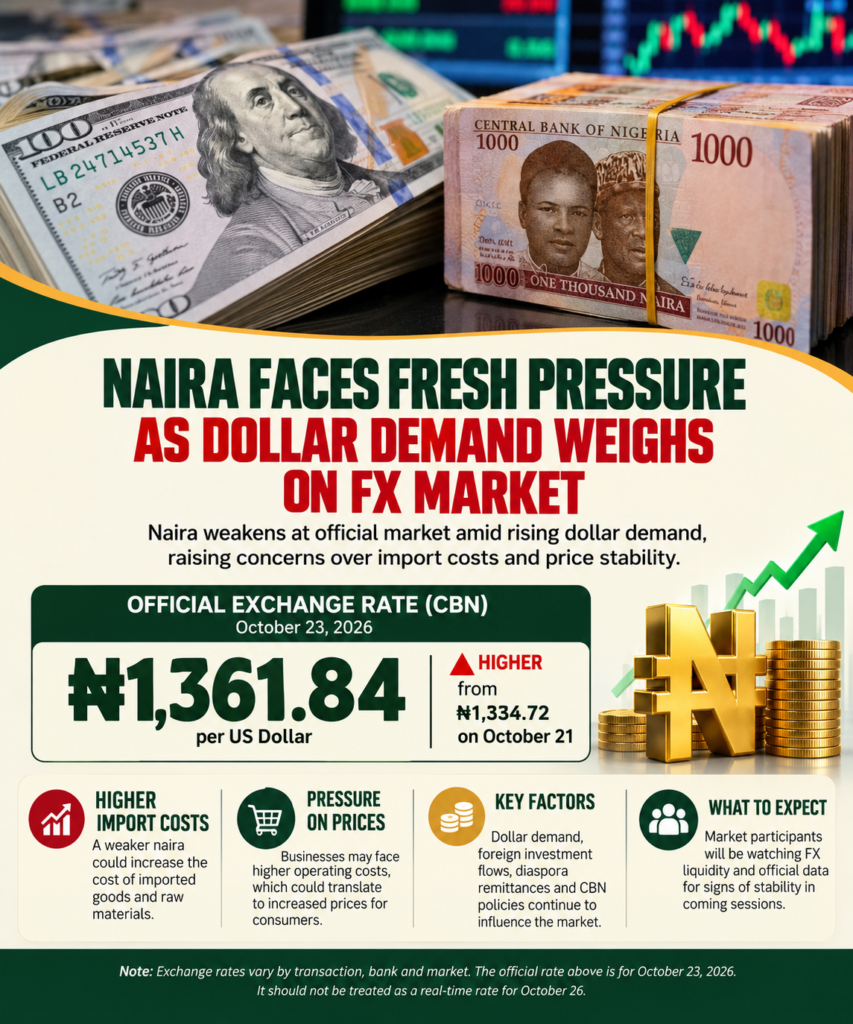
ABUJA, Nigeria — October 26, 2026 — The Nigerian naira is facing renewed pressure in the foreign exchange market as demand for dollars and other foreign currencies continues to influence trading activities, raising concerns about exchange-rate stability and the cost of imports.
Recent market data indicate that the naira weakened at the official foreign exchange market in the week leading up to October 23, with the dollar trading at approximately ₦1,361.84 at the official selling rate published for that date. show that the official rate rose from about ₦1,334.72 on October 21 to ₦1,361.84 on October 23. <Cite refs={[“turn285834search12″,”turn285834search15”]}/>
The development highlights the continued sensitivity of the foreign exchange market to dollar demand, capital movements and the availability of foreign currency for businesses and individuals.
Exchange Rate Outlook
The dollar remains a key currency for Nigerian importers, manufacturers, international travellers and students paying fees abroad. Changes in its value against the naira can affect the cost of imported goods, production inputs, transportation and other consumer expenses.
When the naira weakens, importers may face higher costs, which can translate into increased prices for goods and services. Conversely, sustained naira appreciation could ease some import-related cost pressures, although the extent of any relief depends on other economic factors.
Factors Influencing the Naira
Market analysts continue to monitor foreign exchange supply, demand from importers, foreign investment flows, diaspora remittances and the Central Bank of Nigeria’s monetary and foreign exchange policies.
Nigeria’s ability to attract foreign investment, boost non-oil exports and maintain confidence in its foreign exchange framework will remain important to the currency’s performance.
What Nigerians Should Expect
Businesses that rely heavily on imported materials may continue to face uncertainty over pricing and operating costs if exchange-rate movements persist. Consumers could also feel the effects through the prices of imported products and other goods whose production depends on foreign inputs.
For now, market participants will be watching official exchange-rate data and foreign exchange liquidity for signs of whether the naira can regain stability in the coming sessions.
Note: Exchange rates vary by transaction, bank and market. The official figures cited above relate to October 23, 2026, the latest dated official rate verified for this report; they should not be treated as a confirmed live rate for October 26. Parallel-market quotations also vary by dealer and location.