
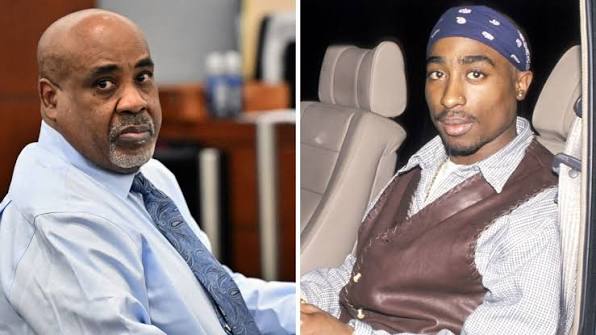
A Las Vegas jury has convicted Duane “Keffe D” Davis of first-degree murder with the use of a deadly weapon in the 1996 killing of hip-hop icon Tupac Shakur.
The verdict was delivered on Monday, August 31, after jurors deliberated for less than three hours. Davis, the only person charged in connection with Shakur’s death, now faces a possible life sentence. He is scheduled to be sentenced on October 13.
During the two-week trial, prosecutors presented evidence alleging that Davis supplied the gun used in the shooting and directed members of the South Side Compton Crips, a street gang prosecutors said he helped lead, to target Shakur in Las Vegas on September 7, 1996.
Chief Deputy District Attorney Binu Palal described the killing during opening arguments as an act of “gang retaliation and revenge.”
Prosecutors alleged that the shooting was carried out in retaliation after Shakur and Death Row Records boss Marion “Suge” Knight assaulted Davis’ nephew, a member of the Crips, earlier that night.
At the time, Shakur was signed to Death Row Records, which prosecutors said had connections with the Bloods-affiliated Mob Piru gang, while Davis was linked to the rival South Side Compton Crips.
Knight was driving the vehicle in which Shakur was a passenger when gunmen opened fire. Knight was also wounded but survived, while Shakur died from his injuries six days later.
Former Las Vegas Metropolitan Police Officer Greg Dale, who accompanied Shakur in an ambulance following the shooting, testified that the rapper declined to identify those responsible.
According to Dale’s testimony, Shakur’s final words were: “No, we’ll take care of it.”
The trial also examined tensions between Death Row Records and Sean “Diddy” Combs’ Bad Boy Records, which prosecutors said became intertwined with the long-standing rivalry between the Bloods and Crips.
Several former gang members and Death Row associates testified about security arrangements and tensions surrounding the music industry rivalry during the 1990s.
A major part of the prosecution’s case centred on Davis’ own public statements and admissions.
Davis was indicted in 2023, decades after Shakur’s killing and four years after the publication of a memoir he co-wrote, Compton Street Legend, in which he admitted being in the vehicle involved in the shooting and providing the weapon used in the attack.
Prosecutors also relied on police interviews conducted in 2008 and 2009, during which Davis allegedly admitted his involvement in the events surrounding Shakur’s killing.
The defence argued that Davis had fabricated or exaggerated parts of his story and described the prosecution’s evidence as incomplete.
However, prosecutors maintained that Davis’ repeated admissions were central to proving his guilt.
“The one thing Davis never says from 1998 to 2023 is, ‘I wasn’t there,’” Palal told the jury during closing arguments.
Clark County District Attorney Marc DiGiacomo said Davis was attempting to avoid responsibility for a crime he had repeatedly admitted involvement in.
Following the verdict, prosecutors announced they would not pursue a gang enhancement previously attached to the murder charge, citing “witness logistics.”
Davis is expected to return to court for sentencing on October 13.