
Measles cases across the United States have surged to their highest level in more than three decades, with several states declaring outbreaks and health officials raising concerns over declining vaccination rates.
Maryland recorded 14 new cases this week, bringing its total for the year to 31. Twenty-seven of those infected were unvaccinated, with most cases reported within the past six weeks.
Cases have been reported in St. Mary’s, Carroll, Cecil and Charles counties, with St. Mary’s recording the highest number at 13.
The Maryland Department of Health has urged residents to verify their vaccination status, warning that measles is highly contagious but poses minimal risk to people who are fully vaccinated.
In Iowa, health authorities have confirmed 17 cases linked to exposures at nine locations, including grocery stores, pharmacies and restaurants in Clive, West Des Moines, Des Moines, Ottumwa and Bloomfield. Thousands of people may have been exposed at the affected locations.
Pennsylvania has also reported two measles-related deaths, both involving unvaccinated residents of Lancaster County. The deaths are the state’s first from measles in 35 years.
The state has recorded 393 cases across 28 counties so far this year.
Nationwide, the U.S. Centers for Disease Control and Prevention (CDC) had confirmed 2,777 measles cases as of August 20, the highest annual total since 1991. Last year, the country recorded 2,289 cases and three deaths.
Health authorities said the overwhelming majority of people infected were unvaccinated.
Two doses of the measles, mumps and rubella (MMR) vaccine provide about 97 percent protection against measles, while about nine in 10 unvaccinated people exposed to the virus are expected to become infected.
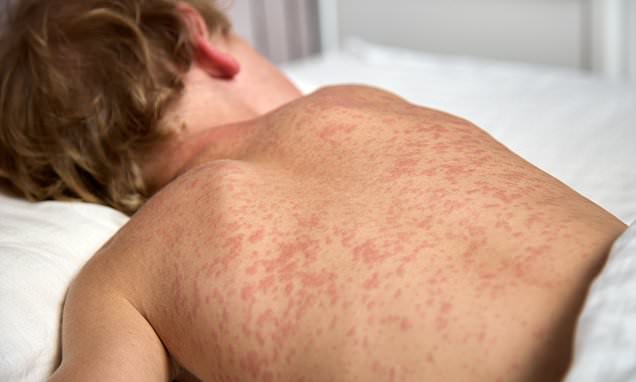
Measles typically begins with fever and cough before developing into a characteristic rash that spreads across the body. Although some infections are mild, the disease can cause serious complications, including pneumonia, brain swelling and severe immune-system damage, particularly in children.
The virus spreads through the air and is extremely contagious, especially in enclosed and crowded environments such as airports and aircraft.
Nationally, 92.4 percent of kindergarten children are fully vaccinated against measles, below the estimated 95 percent coverage needed to maintain community protection. Vaccine exemptions have also increased to 4.2 percent, compared with 1.6 percent a decade ago.
Health officials continue to stress that the MMR vaccine is safe and remains the most effective protection against measles.