
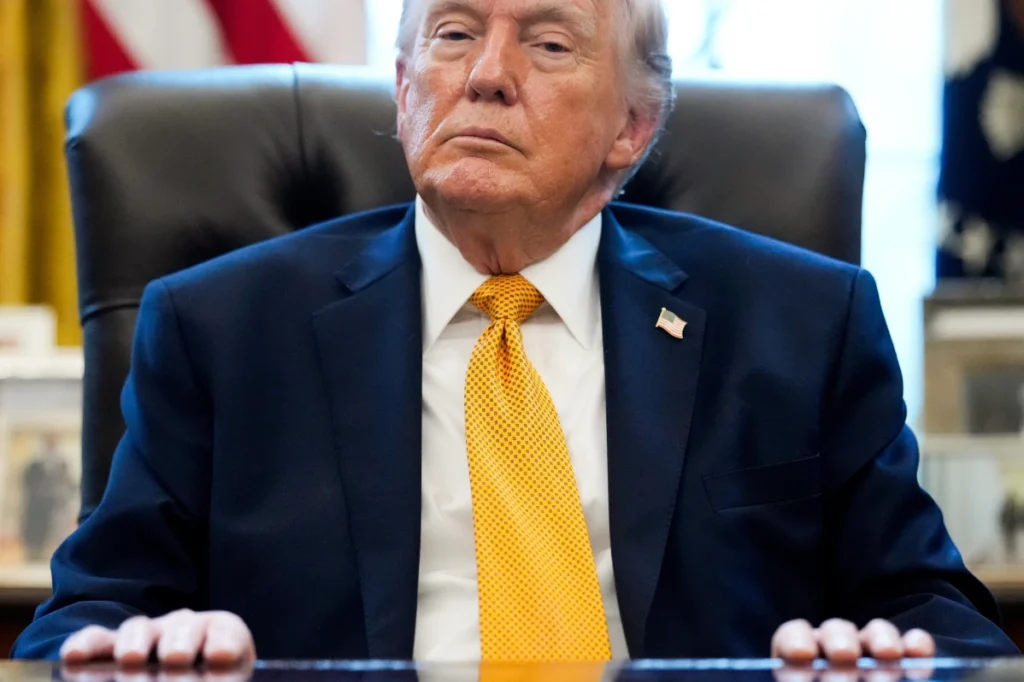
Washington, D.C. — On Tuesday, U.S. President Donald Trump sharply criticized NATO allies for declining to support a proposed mission to reopen the Strait of Hormuz, asserting that the United States is prepared to confront Iran independently if necessary.
Speaking at the White House during a meeting with Irish Prime Minister Micheál Martin, President Trump described the allies’ response as a failure of commitment within the alliance.
“I think NATO is making a very foolish mistake,” Trump said, adding that the situation served as a critical test of the alliance’s reliability.
The remarks follow a decision by several U.S. allies to refrain from participating in a U.S.-led initiative to escort commercial vessels through the strategically vital Strait. French President Emmanuel Macron stated that France would not take part under current conditions, emphasizing the need for regional stabilization before any involvement.
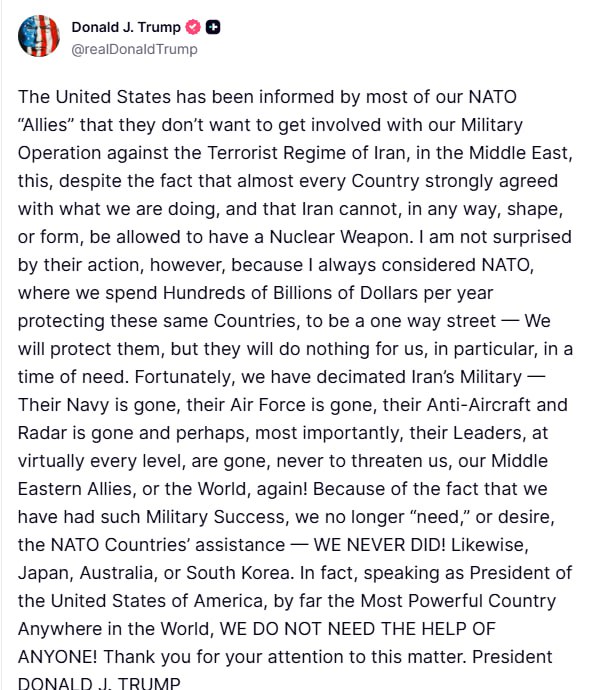
Despite the lack of allied support, President Trump maintained that U.S. military capabilities remain sufficient, noting that additional assistance is not required at this stage. In a separate social media statement, he suggested that recent military progress has reduced the necessity for NATO engagement.
Expanding his critique, Trump characterized NATO as a “one-way street” and expressed dissatisfaction with the level of support from other partners, including Japan, Australia, and South Korea. He indicated that while no immediate changes are planned, the U.S. relationship with NATO could face reassessment.
The president also singled out specific leaders, including British Prime Minister Keir Starmer, for what he described as insufficient backing, and dismissed France’s position, suggesting it could shift in the near future.
Tensions in the Strait of Hormuz have escalated in recent weeks following reported actions by Iran targeting regional energy infrastructure and issuing threats against oil tankers.
The waterway remains a critical conduit for global oil supply, and disruptions have contributed to rising energy prices and heightened geopolitical uncertainty.
While addressing the broader conflict, President Trump offered mixed signals, describing the situation as a limited military operation while indicating that U.S. involvement may conclude in the near term.
However, he did not provide specific details regarding long-term objectives or future governance considerations in Iran.
The evolving situation continues to place pressure on U.S. allies to clarify their positions as regional instability persists and global economic concerns intensify.