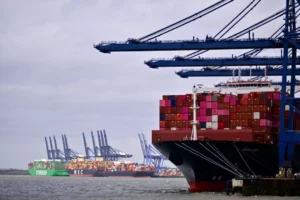
U.S. President Donald Trump is expected to announce the formation of a multinational coalition aimed at escorting commercial vessels through the strategically vital Strait of Hormuz, according to reports.
The initiative comes as Washington intensifies efforts to reopen the key shipping route after Iran restricted passage through the strait, triggering sharp disruptions to global energy markets and raising fears of a broader economic crisis.
Officials say the coalition, led by the United States, would involve several allied nations providing security escorts for commercial shipping in the waterway, which handles a significant portion of the world’s oil supply.
Discussions are ongoing regarding whether the escort operations would begin during the current hostilities or after fighting subsides.
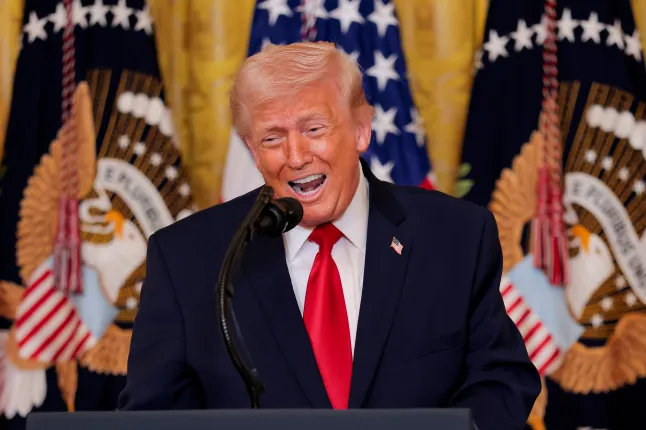
Speaking to reporters aboard Air Force One on Sunday, Trump confirmed that his administration is in talks with seven countries about participating in the effort.
“I’m demanding that these countries come in and protect their own territory, because it is their territory,” the president said, declining to identify the governments involved.
Trump has previously called on nations including China, France, Japan, South Korea and United Kingdom to support measures to secure the strait.
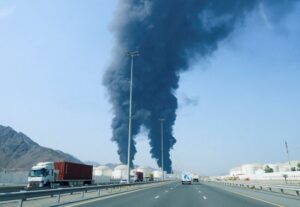
However, some governments remain cautious about publicly committing military assets to the region, citing concerns about escalating tensions with Tehran. Iran has reportedly deployed naval mines in the strait and warned it could target vessels attempting to pass through.
In a joint statement released Sunday, the United Kingdom and members of the Gulf Cooperation Council condemned Iran’s restrictions on the strait and affirmed their right to “take all necessary measures to defend their security and stability and protect their territories, citizens and residents.”
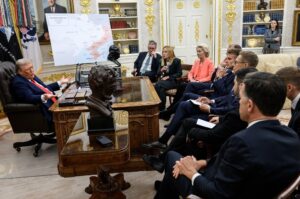
Despite the statement, British Prime Minister Keir Starmer ruled out deploying warships for now, although he held discussions with Trump on the “importance of reopening the Strait of Hormuz.”
Meanwhile, Energy Secretary Ed Miliband said the British government is “intensively looking” at options to restore shipping flows but stopped short of outlining a specific plan.
The disruption has sent global oil prices soaring above $100 per barrel, adding pressure on international markets and fueling concerns over rising fuel costs. Prices climbed further on Monday after the United States reportedly struck a major Iranian production facility on Kharg Island over the weekend.
U.S. Energy Secretary Chris Wright said the administration hopes to stabilize prices in the coming weeks but acknowledged uncertainty amid ongoing conflict. “There are no guarantees in war,” he said.
Several countries have expressed reservations about joining the proposed coalition. France has rejected the U.S. request, with Armed Forces Minister Catherine Vautrin stating that Paris would maintain a “defensive and protective” posture and would not be drawn into the conflict.
Similarly, German Foreign Minister Johann Wadephul voiced skepticism about expanding the European Union’s Aspides naval mission—currently focused on countering Houthi attacks near Yemen—into the Strait of Hormuz.
EU member states are expected to discuss the proposal during a foreign affairs meeting on Monday.
The The White House declined to comment on reports regarding the coalition.