
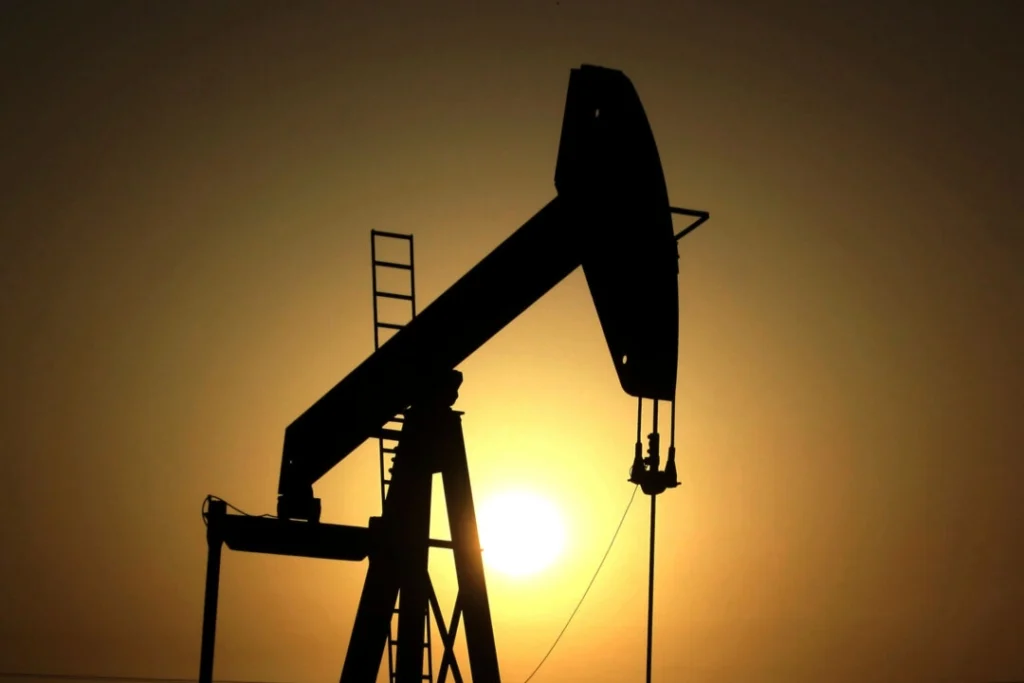
Brent crude oil futures climbed to $106.50 per barrel in late Sunday trading, extending recent volatility in global energy markets as the ongoing conflict involving Iran continues to threaten oil supplies.
Oil prices have swung sharply in recent days. Futures briefly surged to nearly $120 per barrel last Sunday before plunging to the low $80 range by Tuesday, March 10.
Prices then rebounded strongly, closing at $103.89 on Friday. By late March 15, Brent had again rallied to $106.50, before easing to $103.93 as of 9:55 p.m. ET.
The renewed price spike came despite a coordinated effort by the International Energy Agency (IEA) to stabilize markets. On March 11, the agency announced that member countries would release a record 400 million barrels of oil from strategic reserves, including 172 million barrels from the United States.
Analysts say the market remains concerned about the potential for prolonged disruptions in the Middle East.
“Why is the market rallying despite this large release? First, there are no signs of de-escalation in the Persian Gulf, so there is no end in sight to the disruptions to oil flows through the Strait of Hormuz,” ING Bank said in a March 12 statement.
Rising Regional Tensions
Tensions have escalated following U.S. and Israeli strikes against Iranian targets. Iran has warned it could target energy infrastructure across the Middle East if its own oil facilities come under attack.
On Friday, the United States struck more than 90 Iranian military targets on Kharg Island, Iran’s primary oil export hub. The operation reportedly avoided damaging the island’s oil and energy infrastructure, which accounts for about 90 percent of Iran’s oil exports.
Iranian Foreign Minister Abbas Araghchi warned Saturday that Tehran would retaliate if the United States or Israel targeted its oil sector, including attacks on facilities owned by American companies in the region.
Shortly after the strikes on Kharg Island, Iranian drones reportedly hit a key oil terminal in Fujairah in the United Arab Emirates. While oil-loading operations have since resumed, sources say it remains unclear whether activity has returned fully to normal.
Fujairah is a critical export hub located outside the Strait of Hormuz and handles roughly 1 million barrels per day of the UAE’s Murban crude, equivalent to about 1 percent of global oil demand.
Analysts warn that the situation could escalate further.
“The U.S. is weighing high-risk ground options including raiding nuclear sites for Iran’s enriched uranium, seizing the Kharg Island oil hub, and occupying southern Iran to protect the Strait of Hormuz,” said Erik Meyersson, an analyst at financial services group SEB. “All of these imply significant escalation and require a tolerance for substantially higher risk.”
Regional authorities and maritime security agencies also reported on March 11 that multiple commercial vessels had been struck in the Persian Gulf and the Strait of Hormuz, heightening concerns over shipping safety in the vital energy corridor.
Concerns Over Strategic Oil Release
Market participants are also questioning whether the IEA’s massive reserve release will be sufficient to offset supply disruptions from the region.
“There are concerns about the speed at which this oil will reach the market and whether it will be enough to tie up the market until we see oil flowing through the Strait of Hormuz again,” ING Bank said.
Under the coordinated plan, the United States will begin releasing 172 million barrels from its Strategic Petroleum Reserve next week, a process expected to take about 120 days, equivalent to roughly 1.4 million barrels per day.
If other countries follow a similar timeline, total additional supply could reach about 3.3 million barrels per day, analysts estimate—still well below potential supply losses tied to disruptions in the Persian Gulf.
ING Bank said oil prices are unlikely to stabilize until shipping through the Strait of Hormuz returns to normal levels, warning that further price spikes remain possible.
Impact on Fuel Prices
The surge in crude prices is already affecting consumers.
In the United States, the national average price of regular gasoline rose to $3.69 per gallon on Sunday, up nearly 7 percent from $3.45 a week earlier, according to data from the American Automobile Association.
Prices have climbed even higher in some states. California exceeded $5.50 per gallon, while Alaska, Arizona, Oregon, Nevada, Washington, and Hawaii reported averages above $4 per gallon.
U.S. Energy Response
In response to supply risks, U.S. Energy Secretary Chris Wright on March 13 ordered Texas-based Sable Offshore Corp. to resume oil operations off the coast of southern California under the Defense Production Act.
The Department of Energy said the move was intended to mitigate supply disruptions that have left parts of the region and U.S. military forces dependent on foreign oil.
Wright also said the United States is considering naval escorts for oil tankers passing through the Strait of Hormuz, a measure that could potentially begin by the end of the month as tensions persist in the region.