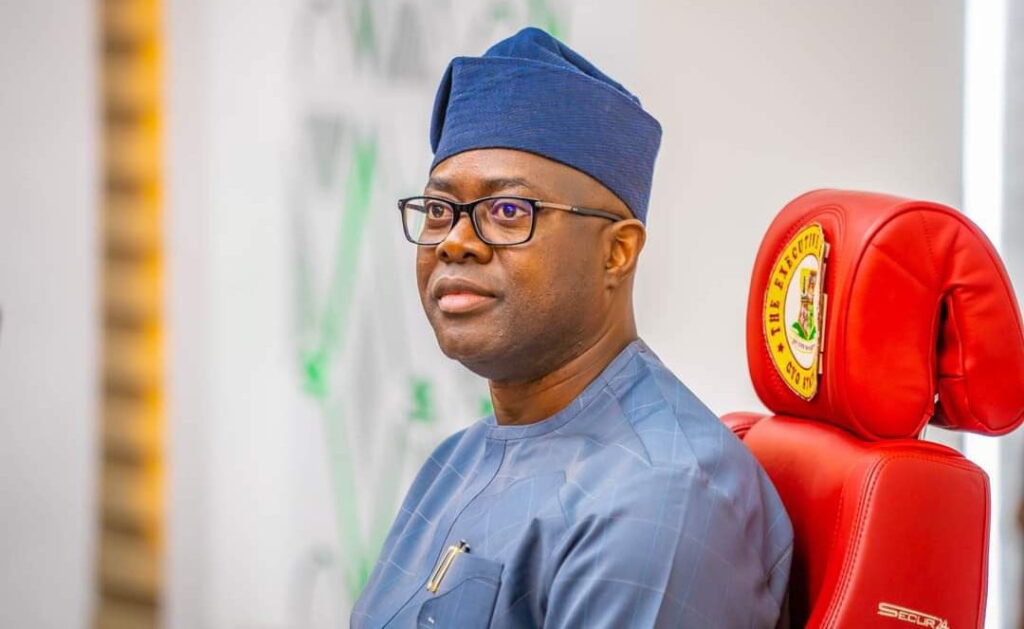
Governor Seyi Makinde of Oyo State wants to change the name of The Polytechnic Ibadan to Victor Omololu Olunloyo Polytechnic, Ibadan, in honour of the late Dr. Victor Omololu Olunloyo, a former governor of the old Oyo State.
Dr. Olunloyo was the first Ibadan-born governor and also served as the first principal of the institution. He was well-known for his achievements in mathematics and passed away on April 6, 2025. Makinde said the name change is to honour his achievements and life.
However, many students, alumni, and other concerned individuals have reacted negatively to the governor’s plan. They have called on him to reverse the decision and allow the school to keep its original name. On Tuesday, students protested the move by blocking the school gate and the busy Sango-Eleyele road in Ibadan. This protest caused traffic and left many commuters and staff stranded, as they could not access the institution.
The Students’ Union Government (SUG), led by its president, Olamide Oladipupo, said the decision was unfair and damaging. He explained that The Polytechnic Ibadan has existed for over 50 years and is known nationwide for its academic excellence and contributions to society.
According to him, changing the name would erase the institution’s history, harm its image, and hurt its alumni community. The union asked the governor to rethink his decision and offered to hold discussions to find a better way to honour the late governor.
Also reacting, the Campaign for Democratic and Workers’ Rights (CDWR) said the name change is a symbolic move that does not solve the real issues facing the school. According to the group, the institution needs proper funding, improved infrastructure, and better welfare for both students and staff. The CDWR stressed that what the Polytechnic truly needs is serious development, not just a name change.
Abiodun Bamigboye, CDWR’s Oyo State coordinator, urged the government to focus on meaningful changes. He called for proper maintenance of buildings, modern learning equipment, and overall better facilities.
He also emphasized the importance of good staff welfare through fair pay, job security, and opportunities for training. For students, he proposed more bursaries and scholarships, along with a reduction in school fees to help children from poor homes.
The CDWR also raised concerns about the lack of transparency in how the school is being managed. They criticised the use of an external consultancy firm, Platinum, to handle key decisions, saying it goes against the Polytechnic Act and weakens accountability. They added that most staff—both academic and non-academic—work under poor conditions as casual workers. Instead of fixing this, the school’s leadership, under Dr. Taiwo Lasisi, has allegedly tried to stop union members from speaking out.
According to the CDWR, the school interfered with the Non-Academic Staff Union (NASU) election and even arrested some members to stop them from challenging bad practices. They described these actions as an attack on workers’ rights and democratic values.
The group demanded that the administration stop harassing union members and uphold freedom of association and expression. They said the name change will only matter if it comes with honest and long-lasting improvements in funding, leadership, and staff/student welfare. Otherwise, it will be just a meaningless act.
Chief Adeyemi Soladoye, a former president of the Central Council of Ibadan Indigenes (CCII), also advised the governor to drop the name change. Soladoye, who is also an alumnus of the school, warned Makinde not to be misled by political opportunists. He reminded the governor that leadership is temporary and that the name “The Polytechnic Ibadan” holds deep meaning for many people across Nigeria.
While appreciating Makinde’s development projects and love for Ibadan, Soladoye pointed out that the institution was originally meant to serve the entire Western Region. It was not created for Ibadan alone, and for over 50 years, many governors, both military and civilian, did not rename the school. He questioned why Makinde feels the need to do so now. He also argued that honouring someone doesn’t require renaming the whole school. Other schools have only named halls of residence after their founding leaders.
Soladoye also said Ibadan has many other heroes who deserve to be honoured. Naming several things after one person may seem excessive, especially when a park at the airport is already named after Olunloyo.
He said it’s important for the governor to think long term and not ignore the people’s feelings. He gave examples of past leaders who listened when Nigerians asked them to reverse unpopular decisions—like when President Jonathan changed the name of UNILAG and had to cancel it.
He also mentioned that many people in Ibadan are still unhappy about the loss of important public lands and properties, like Agodi Gardens, Premier Hotel, and Agbowo Shopping Complex. He said allowing the Polytechnic to keep its name would help reduce people’s frustration. Finally, Soladoye asked the governor to let the people have their way on this issue. He said doing so would not weaken the governor’s image but rather boost his reputation as a leader who listens to the people.